My garden is feeding the squirrels instead of feeding me
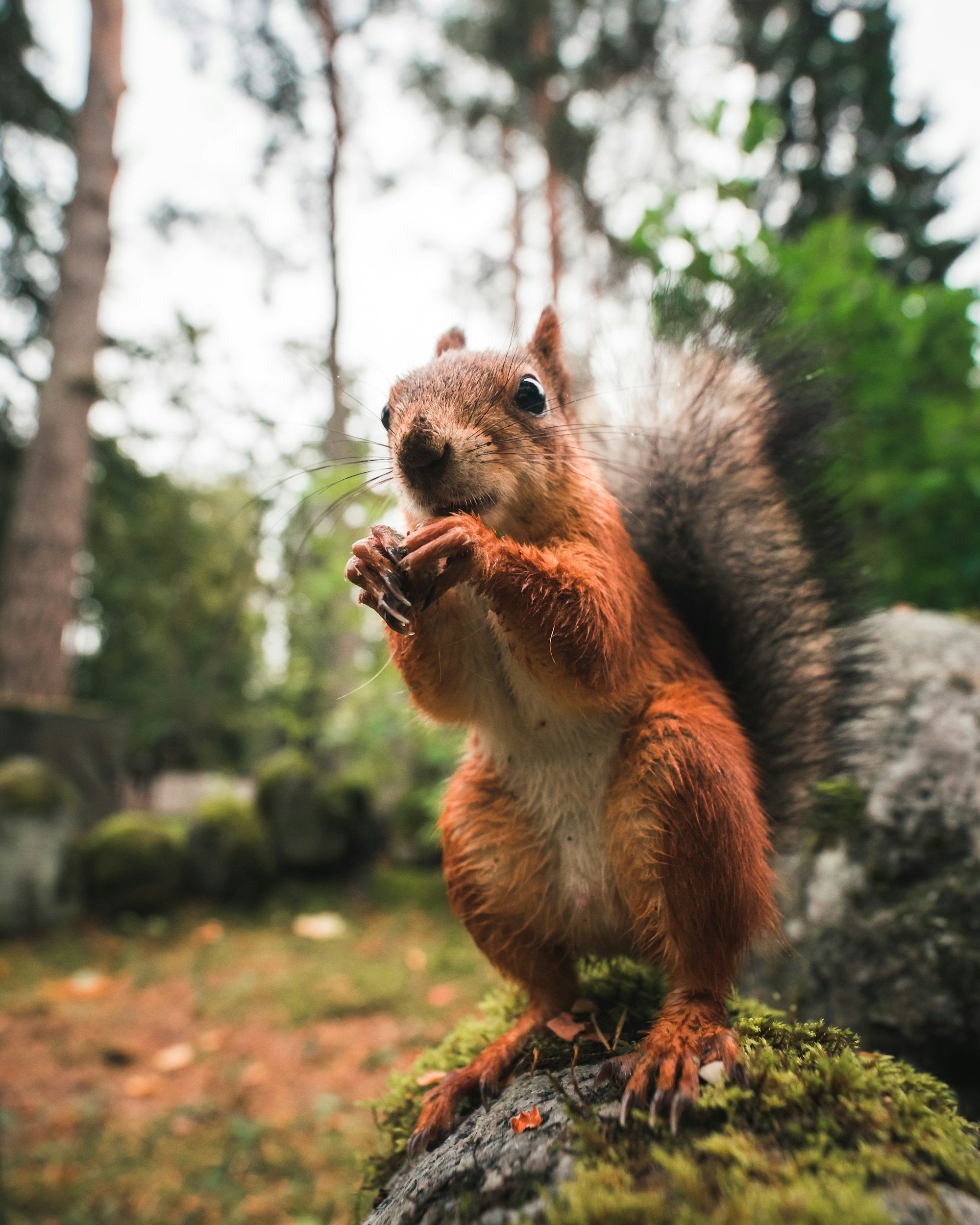
You’re mad because the neighborhood squirrels, rabbits, and deer are getting fat off the fruits of your labor — while you haven’t even gotten to try your own beautiful heirloom tomatoes! Well, you’re in good company. Even someone like me, who happens to be mostly into letting wildlife get its share, gets super frustrated when entire crops are devoured. It can be infuriating and can absolutely make you want to give up. Here are some ideas to consider:
Disclosure: this list contains affiliate links, which means I may earn a small commission if you buy through my links, at no extra cost to you. As an Amazon Associate I earn from qualifying purchases.
The Fortress
The most surefire way to keep these types of critters out of your garden is going to be wire grid fencing (like chicken wire or hardware cloth) in all directions. I am talking even under the beds (i.e. voles) and over the top of your garden (i.e. squirrels). This is the most expensive and most aggressive option. You could enclose the whole garden area (sort of like a human-sized chicken coop) or I have also seen really cool hinged versions that go on top of each bed like this. Depending on the grid size, this method will keep pretty much anything that could eat your garden out, with the exception of bugs and grubs.The Wrap-Around
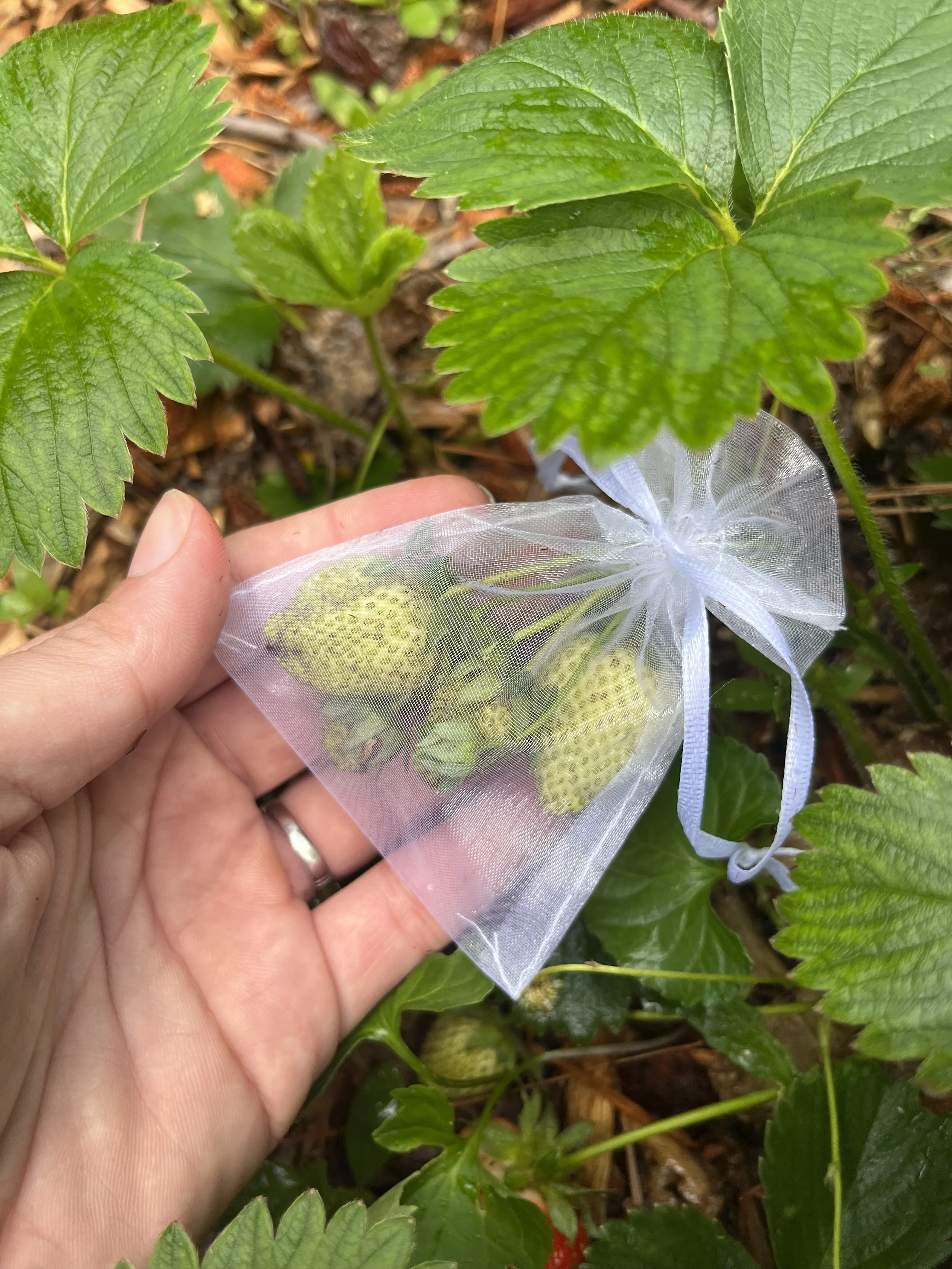
It’s not going to look super beautiful, but protecting your fruits and crops with mesh fabric netting is another way to keep critters out. It works especially well if you add hoops to your beds to hold up the netting, which can also be helpful if you ever have to cover for frost. The problem with completely covering your garden with mesh fabric is that you’ll also keep pollinators out. Another more targeted option is organza gift bags to individually cover fruits as they mature (I love using these for strawberries and tomatoes!). Last, it sounds nuts, but you can even snap the clear plastic clamshells you get at the grocery (like those that blueberries might come in) around your fruit to protect it as it ripens! (Is it nuts if it works?) The good thing about these physical barrier methods is that they work for pretty much any pest, even most grubs and insects.The Surprise Shower
Motion-activated sprinklers are another good way to deter animals from lingering in your garden. Deer tend to be the most startled by them, but the water can sometimes help deter rodents too. Some use batteries and others are solar-powered.The Fakeout
I put rubber snakes and plastic owls all over my garden. The trick (according to… me) is to move them around every week or two using clean gloves so that the fake animals are not covered in human scent. I have no idea if this is evidence-based. But I do think it helps!The Shiny Stuff
Shiny objects that move in the wind like mini disco balls, old CDs, or reflective pinwheels can help keep birds and deer away. They are probably going to be less effective at deterring squirrels and rabbits. The disco balls look pretty cute though.The Stinky Stuff
Some people (including a lot of my clients!) swear by animal repellent products, while others say they don’t work at all. Liquid Fence is probably the most popular one for deterring deer, Bonide is directed at basically all animals, and coyote pee is a weird but old school deterrent. These all need to be reapplied regularly (especially after rain) and they can sometimes kind of stink. But sometimes, when you get frustrated enough, you just gotta do what you gotta do.The Real Predators
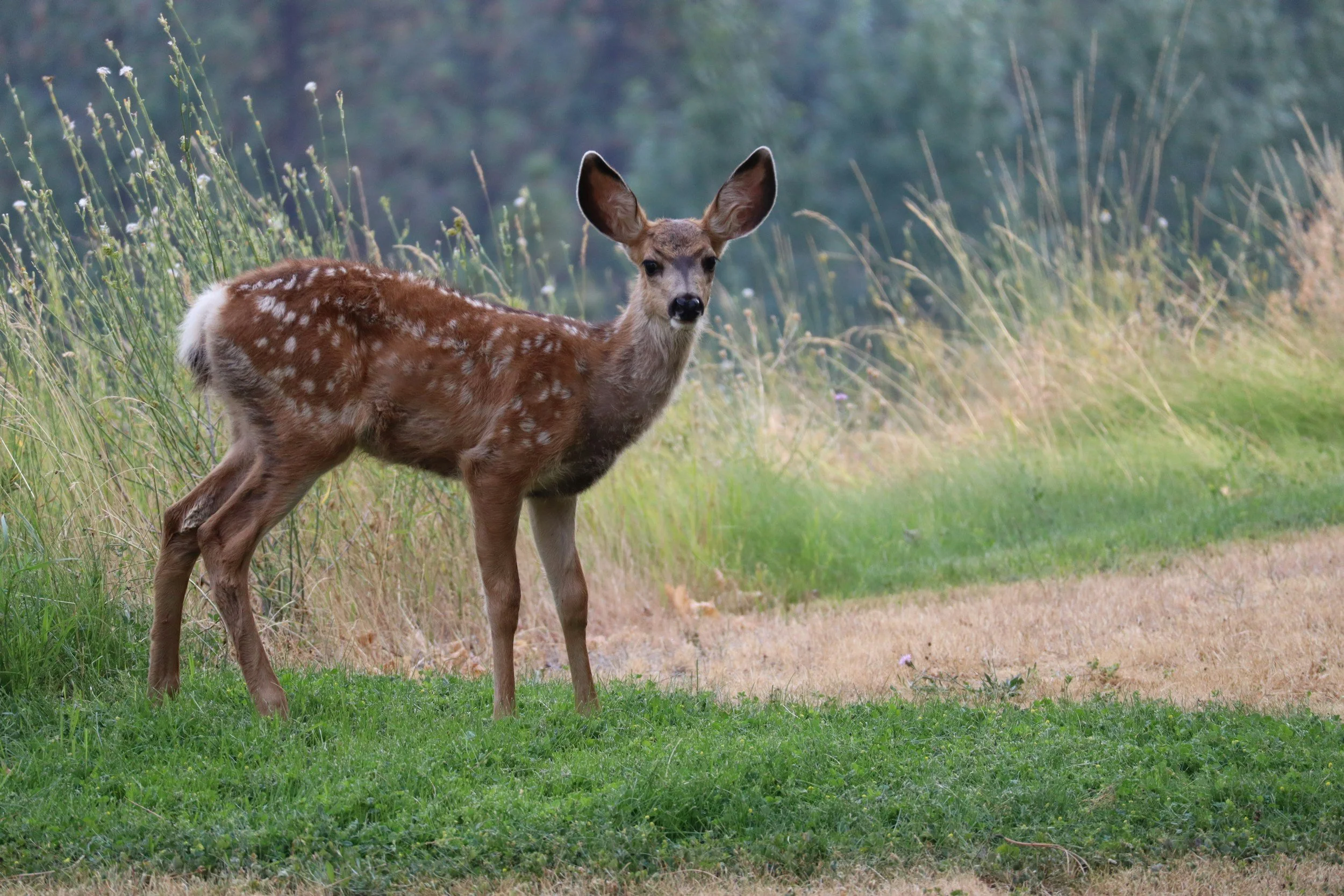
If you have a dog, consider letting it hang out near your garden. Deer, rabbits, and squirrels will be able to scent it and will tend to steer clear. When we were away from home for a couple months this year, we noticed deer poop in our backyard where we’ve never seen them before — I think they got bold since our dog Potato’s scent was gone. Consider adding an owl box to a nearby tree. Just one owl can eat literally thousands of rodents a year (several a day!). This next one might make me sound sort of evil but here goes: if you put in a bird bath (with a bubbler, they like the sound of running water), you’ll attract lots of beautiful songbirds. If you have some mature trees or other tall vantage points, hawks will likely perch on them, see all the birds at the birdbath, and decide it’s a big beautiful buffet made special for them. I told you it would sound bad! But nature is cruel! And it just so happens that most hawks love to eat rodents even more than they like to eat pretty little birds.
The last tip I have is to harvest crops as soon as you can. For example, blueberries and strawberries won’t really ripen after being picked, so you have to wait. Organza bags are good options for these. Tomatoes, on the other hand, can be picked as soon as they start blushing and left to keep ripening in in your kitchen window. Most stone fruits like peaches and plums can also ripen a bit after being picked. Peppers won’t ripen further once picked, but if you are having issues getting them to the yellow/orange/red phases, they can typically be eaten green once they’ve reached their full size.
I know how frustrating it can be to have wildlife take all of your harvests. I always try to plant enough that there is some for everyone, but sometimes the animals just aren’t interested in letting me have any — and that’s when I know I have to break out my (little organza) bag of tricks. I hope you’ll try some of the ideas above and let me know if they work for you!